.
.


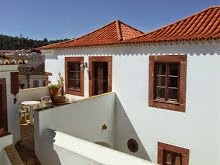
Museum-House João de Deus
constitutes a vector of the Socio-cultural Department of the City Council of Silves and it is formed by different sectors.
The Reception integrates the Visitor in the Municipality of Silves.
The Museum Space, dedicated to the life and work of João de Deus, is formed by two spaces.
The first retrospects the time when the poet and pedagogue lived.
The second foregrounds his work.
In the Multimedia Space, films and DVDs can be visualized, CDs heard, the Internet navigated, diverse software used and enjoyed.
In the Hemerothec informal reading of periodicals and magazines.
In the free access Library documents are authorized and lent for presence or home reading.
In the Ludothec the imagination of the younger ones is stimulated, preferentially through fantasy and adventure games.
In the Multipurpose Room diverse activities are developed and the Bar, overlooking the Mother Church and the surrounding hills, constitutes an excellent place for conviviality.
The Museum Space
The Permanent Exhibition
The 1st Floor retrospects the time when the poet from Messines lived in a living-room, kitchen and room
In the 2nd Floor, in appropriate displayers, monographs are shown - first editions – as well as texts, postcards, coins and reproductions of the work by João de Deus.On the walls one may admire oil paintings, engravings and photographs of the author of Cartilha Maternal and Campo de Flores. Drawings by António Carneiro illustrate poems and fables. A caricature by Rafael Bordalo Pinheiro is brought forward to the visitors’ attention.
Library
Organization:
Thematically by areas, defined on the shelves according to the U.D.C. (Universal Decimal Classification)
Access
. Presence
Services
. Issuing of the Reader’s Card
. Guiding in bibliographical research
. Book loans and devolution
. Database research
. Reprography
Documents
. Reference books (Dictionaries and Encyclopaedias)
. Monographs. EU documentation
. Thematic Dossiers
. Local and regional information
. Youth literature
Mediathec
Multimedia Sector
. Diverse software and equipment. Internet
. Access to CD-roms and disquettes
. (specialized magazines)
Audio-Visual Sector
. Television. Viewing of videos e DVDs
. Audition of CDs and cassettes
Ludeo-Paedagogical Sector
. Game boxes (classified by age ranges). Playstation (usage under time limit and subject to prior booking)
Hemerothec Sector
. Local and regional magazines and periodicals. On place reading
. Free access
Ludothec
Main Goals
. To provide the Child with moments of adventure and fantasy;
. To raise the number of playful experiences;
. To reduce inequalities and any type of discrimination;
. To create sharing environments;
. To motivate learning through games;
. To promote partnerships with similar Institutions.
Children may use the Ludothec alone or accompanied by relatives and friends, in order to play freely or to participate in suggested activities.
The space is organized into areas for specific activities through scenarios that are recreated regularly and which enable immersion into worlds of adventure, fantasy, magic and mystery, where the Child participates and/or finds Friends to play with.
Multipurpose room and Bar
Multipurpose room
. Annual planning
. Debates. Conferences
. Workshops
. Book Launchings
. Theatre
. Exhibitions
. Etc.
Capacity and Equipments
. 80 seats
. Sound equipment
. CD readers e audio cassetes
. Television
. Video and DVD
. Support to the activities of the Multipurpose Room
*************
***
. Ramo de Flores
. Folhas Soltas (1876)
. Campo de Flores (1893)
.
.
. Sound equipment
. CD readers e audio cassetes
. Television
. Video and DVD
Access
. Open to other Entities
. Subject to prior booking and to the calendar of annual activities
Bar
. Space for conviviality
. Informal reading of periodicals and magazines. Support to the activities of the Multipurpose Room
*************
***
João de Deus was born in S. Bartolomeu de Messines, on March 8th, 1830.
At the age of 19 he left for Coimbra to study Law. He obtained a degree after 10 years, having led the life of a poet, violin player and drawing artist.
For two years he lived in Beja, where he directed the periodical “O Bejense”. He collaborated in the “Folha do Sul” and other regional periodicals. Having returned to São Bartolomeu de Messines to exercise Law, some friends convinced him to run as candidate for Silves, for the House of Representatives - the National Assembly. Once elected, the poet departed to Lisbon.
One year later, his first book of (lyric and satirical) poetry appeared, under the title Flores do Campo, followed by another one, with 14 poems, called Ramo de Flores, and in 1893 Teófilo Braga collected all the published poems, adding some unknown ones and edited Campo de Flores.
The lyric poetry by João de Deus is characterized by simple style and a wide range of images - stars, flowers and perfumes, waves of the sea and birds in the sky – it translates a yearning for love, for peace and happiness that oscillates between Woman and God, naivety and good intention.
As a poet, he also wrote satires and fables, giving new flavour to old and classical stories for children.
Around 1870, he starts working in what was to be his Cartilha Maternal, a new method of reading and all along his life he would never stop fighting for education and the teaching of the first letters.
Cartilha Maternal was finally published in 1876.
One year before his death, he witnessed a nationwide demonstration by pupils from all the schools in the country - João of Deus was consecrated a Pedagogue.
He died in Lisbon, January 11th, 1896 and was buried in the National Pantheon.
Bibliografy
By the Author
Poetry
. Flores do Campo (1869). Ramo de Flores
. Folhas Soltas (1876)
. Campo de Flores (1893)
Paedagogy
. Cartilha Maternal
About the Author
. O Poeta do Amor.- Emília de Sousa Costa.- Tip. Minerva de Cruz, Sousa & Barbosa, Lda.- Famalicão: 1924
. Éléments pour l'Histoire d'une École de Formation des Instituteurs de Maternelle.- António de Deus Ramos Ponces de Carvalho.- Escola Superior de Educação João de Deus.- Lisboa: 1979
. João de Deus. Pedagogo Moderno.- Henri Campagnolo.- Museu João de Deus.- Lisboa: 1979
. João de Deus, L'Homme, le Poet et le Penseur.- Charles Oulmont.- Misée João de deus.- Lisboa: 1980
. O Fenómeno da Simultaneidade em João de Deus.- Fernando Cabrita.- Empresa Litográfica do Sul.- Algarve: 1985
. João de Deus. O Poeta Pedagogo.- Isabel Maria de Serra Manso de Brito e Silva Cordeiro.-Instituto de Odivelas.- odivelas:1989
. João de Deus. Breves considerações sobre a sua obra lírica.- Morão Correia.-Escola Superior de Educação João de Deus.- Lisboa: 1990
. João de Deus 1830-1896.- Inês Morais Viegas.- Câmara Municipal de Lisboa.- Lisboa: 1996
. Ao Encontro de João de Deus.- Mário Nunes. Zulmira Bento.- Grupo de Arqueologia e Arte do Centro.- Coimbra: 1996
. João de Deus Poeta e Pedagogo.- Fernando Garcia.- Câmara Municipal de Silves.- Silves: 1997
. Poesia (A) de João de Deus em Conversa Paralela.- Maria das Dores Jorge de Goes.- Câmara Municipal de Silves.- Silves: 1997
. João de Deus, Trajectos. Do grés à arte da escrita.- Hélia Coelho.Gabriela Rocha Martins- Folheto Edições.- Leiria: 2010
All visits by Kindergartens, Schools or Groups over 10 Children or Adults must be booked beforehand.
Information and Bookings:
Museum-House João de Deus
Rua Dr. Francisco Neto Cabrita, nº 1
8375-124 São Bartolomeu de Messines
Tel e Fax – 282330189
Email – casamuseu.joaodeus@cm-silves.pt
Opening Hours
(Mondays to Fridays)
Morning
10.00 am to 13.00 pm
Afternoon
14.30 pm to 18.30pm
Credits:
Edition
Sociocultural Department, City Council of Silves
Concept, Selection and Layout
Museum-House João de Deus
Texts and Photos
Museum-House João de Deus
Trad. - Teresa Tudela, MA.
..
.